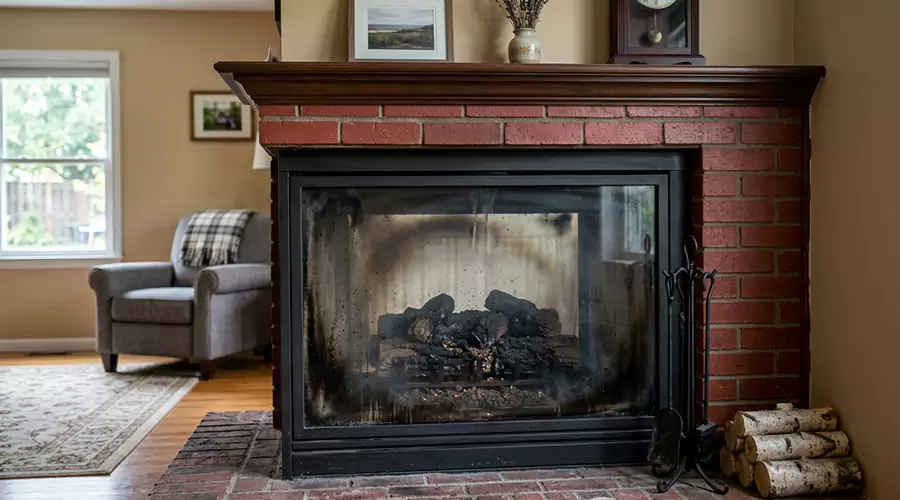
What Causes Gas Fireplace Soot on Glass
Learn why gas fireplace soot on glass develops, what black deposits may indicate, how to clean the surface safely, and how to prevent soot from returning safely.




Based on 500+ Reviews

Proudly American
Owned & Operated

Gas fireplace soot on glass is usually caused by incomplete combustion. When the burner does not receive the correct amount of combustion air, some fuel may not burn completely and can form fine black carbon deposits. Incorrect log placement, blocked burner ports, improper air-shutter adjustment, restricted venting, or incorrect gas pressure can also contribute. Professional gas fireplace repair can help identify and correct the underlying issue to restore proper burner performance and safe operation.
A properly operating gas fireplace should not continually produce black soot. If dark deposits return soon after the glass is cleaned, the underlying combustion problem should be identified rather than repeatedly wiping away the residue.
Black soot is different from the light haze that may occasionally develop on fireplace glass.
Soot is carbon produced during incomplete combustion. It commonly appears as a black or dark gray coating on the viewing glass, logs, burner area, or firebox surfaces. Long orange flames with black tips can also indicate sooting.
| Glass Appearance | Possible Meaning | Recommended Response |
|---|---|---|
| Thin black film | Incomplete combustion | Inspect burner operation |
| Black patch in one area | Flame contacting log or media | Check placement |
| Rapid soot buildup | Air-fuel or venting problem | Arrange service |
| Light gray or white haze | Different residue, not typical soot | Clean as directed |
| Soot plus abnormal flames | Combustion problem | Stop use and inspect |
A gas burner needs the correct amount of fuel and combustion air.
If too little air reaches the burner, the flame can become excessively yellow, long, or lazy. This condition can prevent complete combustion and produce carbon deposits.
An air shutter that is closed too far is one possible cause. Manufacturer operating guidance commonly identifies insufficient combustion air as a primary reason for black soot formation.
Air-shutter adjustments should generally be made according to the fireplace manufacturer's specifications.
Ceramic logs are not simply decorative pieces that can always be placed anywhere inside the firebox.
Gas fireplace logs are usually designed to sit in specific positions relative to the burner ports. If a log is moved into the flame path, the flame may strike its surface.
This contact can cool or disrupt the flame and contribute to incomplete combustion.
Incorrect log or ember placement is specifically identified as a common cause of black coating on fireplace glass.
If soot appeared shortly after the logs were cleaned or moved, their position is worth checking.
Dust, lint, pet hair, debris, and misplaced ember material can interfere with burner openings.
A partially obstructed port can change the shape of the flame and disturb the intended air-fuel mixture.
Signs of burner problems may include:
Burner cleaning requires care because ports and other gas components should not be enlarged, damaged, or rearranged.
Some gas fireplaces use glowing ember material around the burner to create a more realistic appearance.
Too much material or incorrect placement can interfere with burner ports. This can alter the flame pattern and create localized soot.
A black spot that repeatedly develops in the same area of the glass may correspond to an incorrectly positioned log or ember directly behind that location.
Decorative materials should always be positioned according to the fireplace instructions.
Direct-vent gas fireplaces depend on a correctly operating vent system for combustion air and exhaust.
A restriction can interfere with the designed airflow.
Possible venting problems include:
Changes in venting can affect burner performance and combustion. Some fireplace operating instructions specify that vent configuration influences the amount of primary air the burner requires.
Do not disassemble venting components to diagnose a soot problem without appropriate training.
Improper gas pressure can also affect flame characteristics.
Excessive or inadequate pressure can change how fuel moves through the burner and mixes with combustion air.
Incorrect gas pressure is listed as a possible cause when a thin black soot coating develops on viewing glass.
Gas pressure testing requires appropriate instruments and should be handled by a qualified technician.
Recurring soot should not be ignored because it indicates that combustion is not occurring as intended.
Incomplete combustion can also produce carbon monoxide. Poorly adjusted combustion equipment, inadequate air supply, and blocked or defective venting are recognized contributors to indoor carbon monoxide hazards.
Stop using the fireplace and seek professional service if soot is accompanied by:
If a carbon monoxide alarm activates or poisoning is suspected, move to fresh air and follow emergency guidance immediately.
Let the fireplace cool completely before inspecting it.
You can visually check whether decorative logs appear obviously displaced or whether soot is concentrated in one specific area.
Also inspect the exterior vent termination from ground level for obvious blockage.
Do not adjust gas valves, regulators, burner orifices, or gas pressure yourself.
Air-shutter adjustment may also require professional service depending on the fireplace design.
Wait until the glass is completely cool.
Follow the fireplace manufacturer's instructions for removing or accessing the glass panel. Some systems require specific procedures to maintain the door seal.
A fireplace soot cleaner suitable for gas-fireplace glass can help remove dark deposits.
Avoid harsh abrasives that may scratch or damage specialized glass surfaces.
Cleaning alone does not correct recurring soot. If the black coating quickly returns, combustion should be evaluated before regular operation continues.
Arrange service when soot repeatedly returns or flame appearance has changed.
Professional gas fireplace cleaning and maintenance may include:
Fuel-burning appliances should be maintained and properly adjusted because poor operation can increase exposure to combustion pollutants.
Avoid rearranging logs or decorative media unless the fireplace instructions specify their exact positions.
Keep the burner compartment free from excessive dust and debris.
Have persistent changes in flame color or shape investigated rather than compensating by repeatedly cleaning the glass.
Carbon monoxide alarms should also be installed and maintained according to applicable instructions and requirements.
Black soot on gas fireplace glass is primarily a sign of incomplete combustion. Insufficient combustion air, incorrectly positioned logs, blocked burner ports, misplaced ember material, vent restrictions, and gas-pressure problems are common causes.
Cleaning can restore the appearance of the glass, but recurring gas fireplace soot on glass means the cause still needs attention. If soot returns quickly or the flame looks abnormal, stop using the fireplace until the burner and venting system have been evaluated.
No. Persistent black soot generally indicates incomplete combustion or another burner-related problem.
Yes. Flames striking incorrectly positioned logs can disrupt combustion and cause black deposits.
Yes. Blocked or dirty burner ports can alter the flame pattern and contribute to incomplete combustion.
Localized soot often points to a flame interacting with a nearby log, ember material, or another obstruction.
Recurring soot should be investigated before continued use because it indicates improper combustion.
Cleaning removes the visible residue but does not correct the underlying cause. Burner airflow, log placement, venting, or gas pressure may still require attention.
Learn why gas fireplace soot on glass develops, what black deposits may indicate, how to clean the surface safely, and how to prevent soot from returning safely.
